Advanced learners. Curious minds. Welcoming community.
Where Curiosity Gets a Curriculum
Where Curiosity Gets a Curriculum

Gifted and accelerated student learning- re-envisioned
Fjord Day School is aligned with current research regarding pedagogical approaches to gifted student learning, along with global educational practices that create learners who think critically and independently, are able to navigate an increasingly complex world with confidence, and are prepared to excel academically, socially, and with increasing self-confidence.
We are not your average school. See how we are different.
-
Less time sitting, more time learning. Academic instruction is focused and purposeful, with regular breaks, movement, outdoor time, and opportunities for play rather than trying to maximize instructional minutes.
Depth over acceleration. Advanced learners aren’t simply pushed through material faster. Students have time to investigate ideas deeply, make connections across disciplines, ask complex questions, and pursue areas of genuine interest.
Highly skilled teachers with professional autonomy. Teachers are trusted to know their students, adapt instruction, and make meaningful curricular decisions rather than teaching from rigid scripts.
Low emphasis on standardized testing. Assessment is primarily used to understand student learning and guide instruction. Demonstrations of mastery, projects, discussion, writing, observation, and teacher-developed assessments matter more than constant test preparation.
Learning through inquiry and interdisciplinary work. Whenever possible, subjects connect. Science might incorporate mathematics, writing, history, design, and art around a meaningful question or real-world problem.
Play and childhood remain important. Even highly capable children need unstructured time, imagination, movement, creativity, and social interaction. Academic ability isn't treated as a reason to make childhood more adult-like.
Frequent access to the outdoors. Outdoor time isn't reserved for special occasions or perfect weather. Nature, movement, exploration, and outdoor learning become normal parts of the school day.
A calm, humane pace. The goal isn't to keep children constantly busy. The schedule intentionally leaves room for conversation, reflection, transitions, curiosity, and ideas that weren't on the lesson plan.
Collaboration rather than competition. Students can be appropriately challenged without creating a culture built around rankings, prizes, or comparison. Individual growth and mastery take precedence.
Student agency. Children gradually gain meaningful responsibility for what and how they learn, including opportunities to choose questions, projects, methods, and ways of demonstrating understanding.
Equity and belonging. Support is built into the educational environment rather than treating differences among learners as problems to be fixed. Small classes would allow Fjord to respond to individual strengths and needs early.
Whole-child success. Academic achievement matters, but it isn't the only outcome. Independence, creativity, collaboration, curiosity, problem-solving, well-being, and a lasting desire to learn are equally intentional outcomes.
-
Interdisciplinary learning. Science, technology, engineering, arts, and mathematics are connected rather than taught only as isolated subjects. Students use knowledge from multiple disciplines to investigate meaningful questions.
Project-based learning. Students engage in extended projects that require them to research, design, build, test, revise, and communicate their ideas.
Engineering and design thinking. Students regularly encounter open-ended challenges with multiple possible solutions. The emphasis is on the process of imagining → designing → creating → testing → improving.
Inquiry before answers. Teachers encourage students to ask questions, develop hypotheses, investigate possibilities, and use evidence to reach conclusions rather than simply being given information to memorize.
Authentic problem-solving. Learning connects to real-world problems and applications—designing sustainable spaces, programming solutions, studying local ecosystems, building machines, analyzing data, or developing inventions.
Making and hands-on learning. Students have frequent opportunities to build and create using age-appropriate tools, robotics, coding, electronics, fabrication, art materials, and traditional building materials.
The arts as an integral discipline. The “A” in STEAM isn't decoration added to STEM projects. Visual art, design, music, storytelling, and creative expression provide additional ways for students to think, communicate, and solve problems.
Productive failure and iteration. A design that doesn't work isn't a bad grade—it's information. Students learn to analyze what happened, modify their approach, and try again.
Collaboration. Students work together on complex challenges, learning to explain ideas, divide responsibilities, listen to different perspectives, and build upon one another's thinking.
Technology as a tool, not the curriculum. Students learn to use technology purposefully for research, creation, programming, design, modeling, and problem-solving rather than simply increasing screen time.
Student-driven exploration. Gifted learners have opportunities to pursue questions beyond the planned curriculum and develop increasingly sophisticated independent projects.
Public demonstration of learning. Students don't only turn work in to a teacher. They present designs, exhibitions, experiments, performances, prototypes, research, and solutions to authentic audiences.
-
Appropriate academic challenge. Students work at their demonstrated readiness level rather than being limited by age or grade-level expectations.
Acceleration when appropriate. Students who have already mastered material can move forward rather than repeating content they know. Acceleration can occur by subject, unit, or grade level depending on the learner.
Curriculum compacting. Teachers identify existing mastery, reduce unnecessary repetition, and use the resulting time for advanced, enriched, or interest-driven learning.
Depth and complexity. Gifted education is not simply “more work” or faster work. Students investigate concepts more deeply, examine multiple perspectives, grapple with ambiguity, and make connections across disciplines.
Flexible grouping. Students work in different configurations based on readiness, interests, and the demands of a particular task rather than remaining in fixed ability groups throughout the day.
Inquiry and authentic problem-solving. Open-ended questions, research, experimentation, design challenges, and problem-based learning allow gifted students to engage in the sophisticated thinking they are capable of doing.
Student agency and interest development. Students have meaningful opportunities to pursue individual interests, develop independent projects, and increasingly take ownership of their learning.
Differentiation within an already advanced environment. Gifted students vary enormously. Small classes allow teachers to respond to differences in readiness, interests, strengths, learning profiles, and pace even within a gifted population.
Attention to the whole gifted child. Intellectual development is considered alongside social and emotional development. Asynchronous development, perfectionism, intensity, twice-exceptionality, and differing developmental needs can be supported without assuming that advanced academic ability means advanced development in every area.
A community of intellectual peers. Gifted students benefit from regular opportunities to learn alongside peers who share their capacity for advanced thinking and intense curiosity. This also means a child doesn't have to be the “smart kid” in every room.
Creativity and divergent thinking. Students aren't rewarded only for finding the correct answer. They are encouraged to generate possibilities, take intellectual risks, invent, question assumptions, and develop original solutions.
Ongoing assessment rather than fixed labels. Teachers continually assess what students know and are ready to learn next, allowing instruction to respond to growth rather than treating a gifted designation as the instructional plan itself.
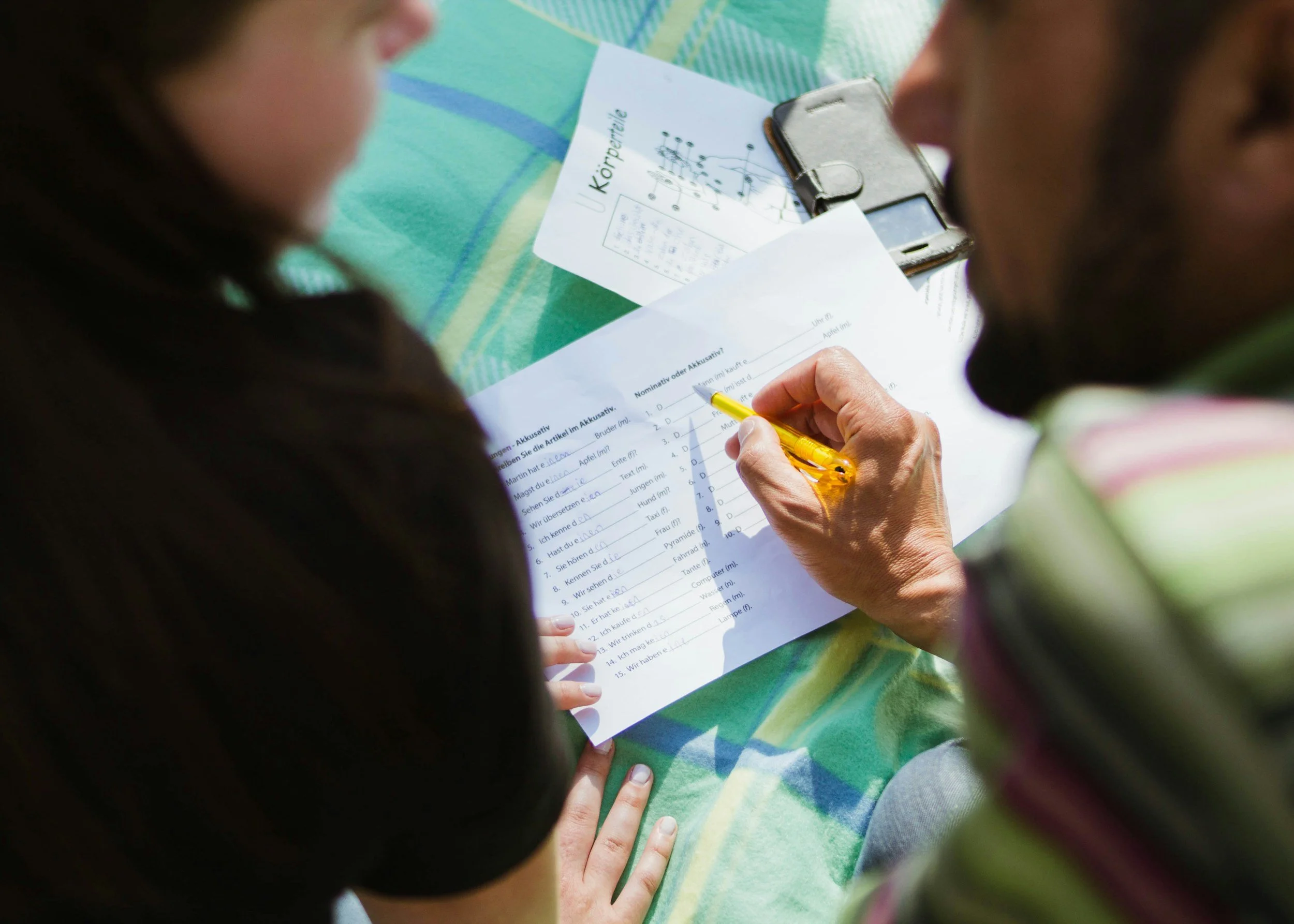
Our teachers are our superpower!
Great schools aren't built around programs. They're built around great teachers.
-
At Fjord Day School, our teachers are our superpower. We seek exceptional educators who understand gifted learners, know their subject matter deeply, and are skilled at recognizing when a student needs greater challenge, a different approach, or simply the freedom to follow an extraordinary question.
Inspired by Finnish educational practices, we believe excellent teachers should be trusted as professionals. Rather than asking teachers to follow rigid scripts or teach toward standardized tests, we give them the autonomy to respond to the students in front of them. Small classes allow teachers to know each child well—their strengths, interests, learning patterns, and areas for growth—and adjust instruction accordingly.
Our teachers aren't simply delivering curriculum. They are designing learning experiences, asking better questions, creating opportunities for discovery, and helping students develop increasingly sophisticated ideas of their own.
We invest in teachers because the quality of the relationship between a skilled educator and a curious child can transform what school becomes.
-
Much of what we recognize as “school” was designed for another time. At Fjord Day School, we aren't interested in recreating the classroom of the 1950s with newer technology.
Instead, we started with a different question:
How would we teach children for today's world if we had no preconceived notions about what school is supposed to look like?
That question changes everything.
It allows us to reconsider how we use time, how we group students, what role teachers play, where learning happens, and even what counts as learning. It gives us permission to keep what research and experience tell us works—and rethink what doesn't.
The result is a school designed intentionally for today's children and the world they are growing into: intellectually ambitious, deeply human, flexible, creative, collaborative, and driven by curiosity.
We aren't trying to improve an old model.
We're asking what school could be if we were willing to design it again.

Why We Hit Different Notes
Curious about our program?
Follow Our Brainwaves
Follow Our Brainwaves
Contact us for more information